Kensington Gardens: a guide to the royal park and what to see
Peter Pan, the Round Pond, the Italian Gardens and the Albert Memorial: a guide to Kensington Gardens, the royal park outside Kensington Palace.
Kensington Gardens began as the private garden of a royal palace. Today it is one of London’s great free parks, 265 acres of lawns, avenues, water and statues, open every day from early morning until dusk. It joins Hyde Park to the east, but it has a quieter, more stately feel, and at its western edge stands Kensington Palace. This guide covers the park’s history and the places you shouldn’t miss.
From palace garden to public park
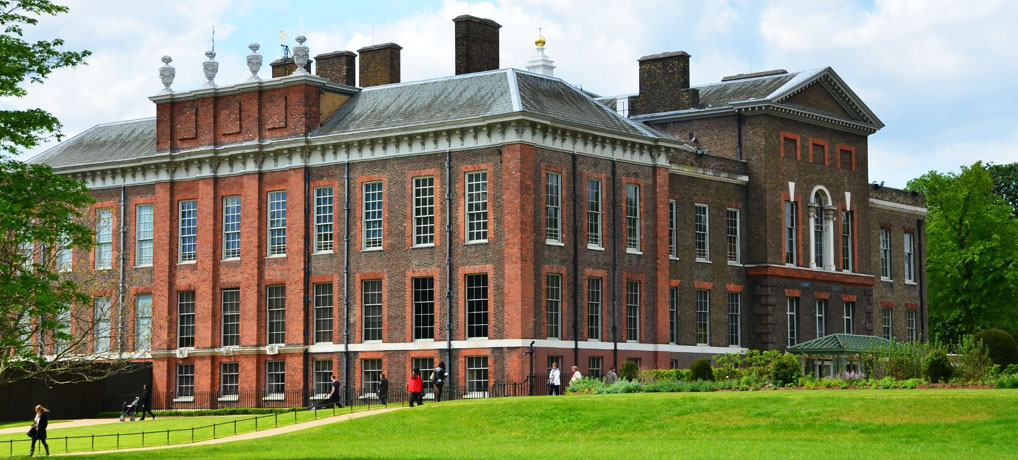
When William III and Mary II bought Nottingham House in 1689 and turned it into Kensington Palace, they took a slice of Hyde Park for their gardens. Queen Anne added more land and built the Orangery. But the park we know is mostly the work of Queen Caroline, wife of George II. From 1728 she had the royal gardener Charles Bridgeman lay out formal avenues radiating from the palace. He dug the Round Pond and dammed the Westbourne stream to form the Serpentine and the Long Water, the lake that divides Kensington Gardens from Hyde Park.
At first the gardens were open only to the court. George II allowed respectably dressed visitors in on Saturdays, when the royal family was away. Over the following century access widened, and by Queen Victoria’s reign Kensington Gardens was a public park in all but name. Victoria, who was born in the palace and played in these gardens as a girl, added some of its finest monuments. Read more in our history of the gardens of Kensington Palace.
The Peter Pan statue
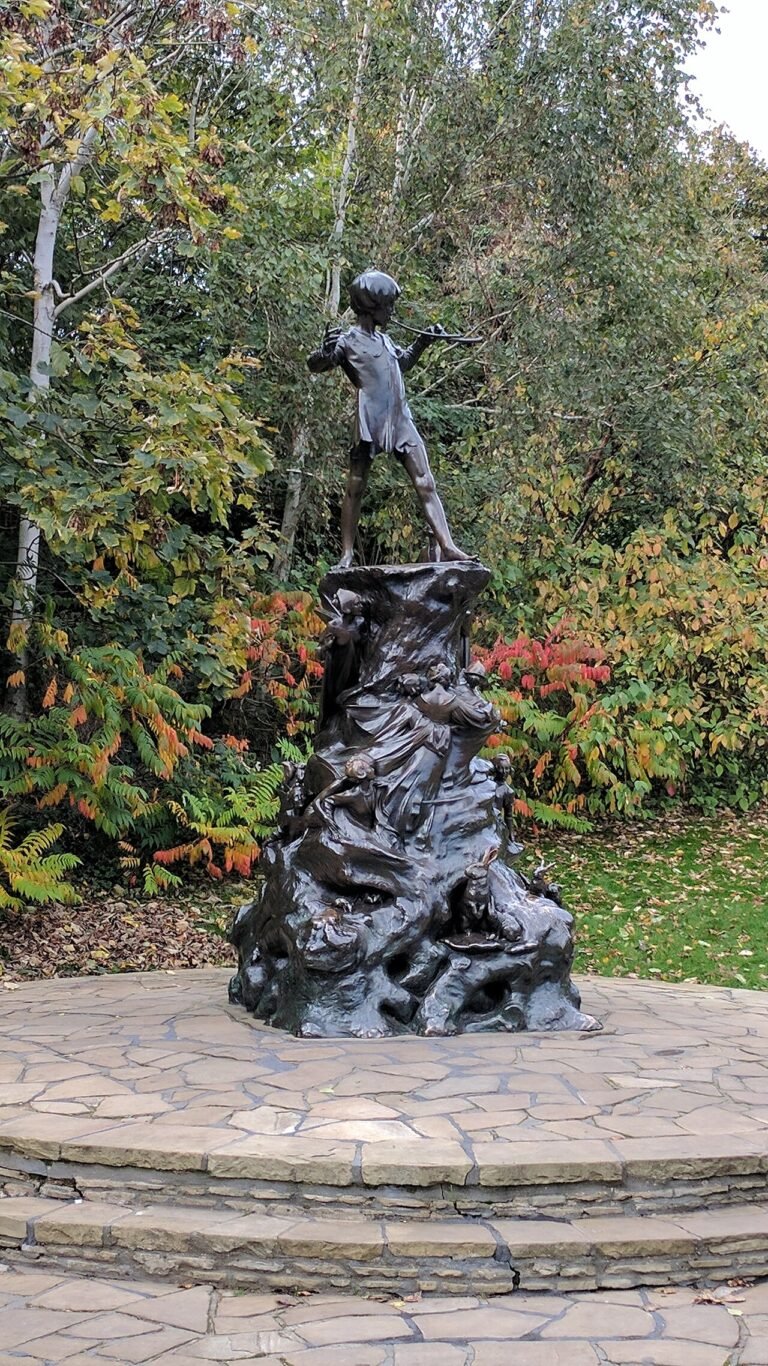
The most visited statue in the park appeared overnight. On the night of 30 April 1912, J. M. Barrie, who lived nearby on Bayswater Road and walked his dog in the gardens, had a bronze statue of Peter Pan put up beside the Long Water without permission. The next morning a notice in The Times announced it as a May Day surprise for the children of London. Some people grumbled about an author advertising his own work in a royal park, but the statue stayed.
The sculptor, George Frampton, showed Peter standing on a tree stump, blowing a pipe, with fairies, squirrels, rabbits and mice climbing up towards him. The spot was chosen with care: in Barrie’s story The Little White Bird (1902), Peter flies out of his nursery and lands here, on the bank of the Long Water. You’ll find it on the west bank, a short walk south of the Italian Gardens. The bronze animals have been polished smooth by generations of small hands.
The Italian Gardens and the Long Water
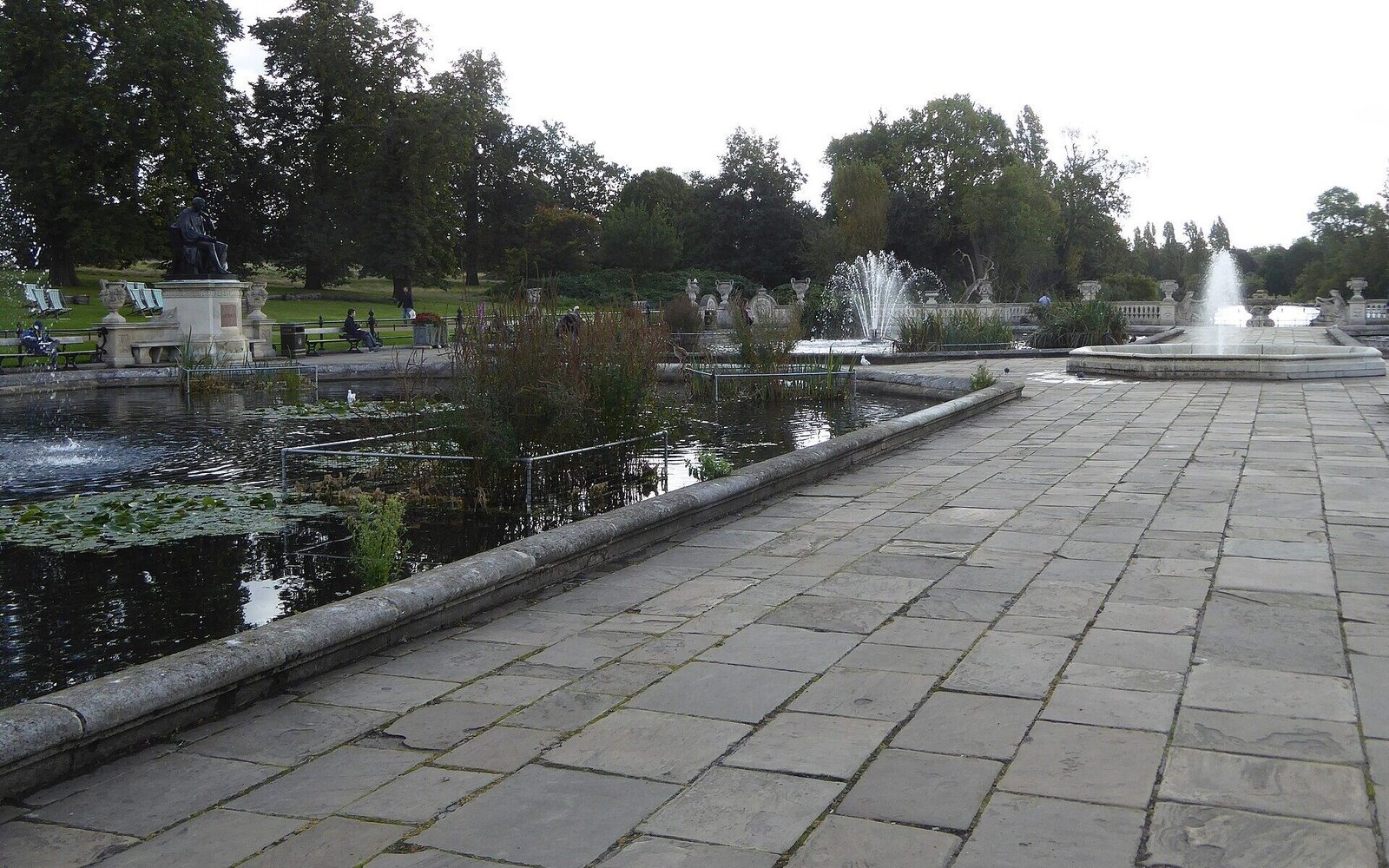
At the northern tip of the Long Water, close to Lancaster Gate, are the Italian Gardens: four ornamental pools with fountains, stone urns and a little Italianate pump house. They were created around 1860 and are said to have been Prince Albert’s gift to Queen Victoria, modelled on gardens he admired at Osborne House. The fountains were once powered by a steam engine housed in the pump house. Today the gardens are a calm, symmetrical spot to start a walk, and the café beside them is one of the best in the park.
Just beside them stands Queen Anne’s Alcove, a stone shelter designed by Christopher Wren that was moved here in the nineteenth century. From the Italian Gardens a path runs down the west bank of the Long Water to Peter Pan and on to the Serpentine Bridge, which marks the border with Hyde Park.
The Round Pond and the Broad Walk
In front of the palace’s east front lies the Round Pond, dug for Queen Caroline in 1730. Despite its name it is not quite round, and it covers about seven acres. Swans, geese and ducks crowd its edges, and on summer weekends people sail model boats here, as they have since Victorian times. Stand on the eastern bank and you get the best view of the palace across the water.
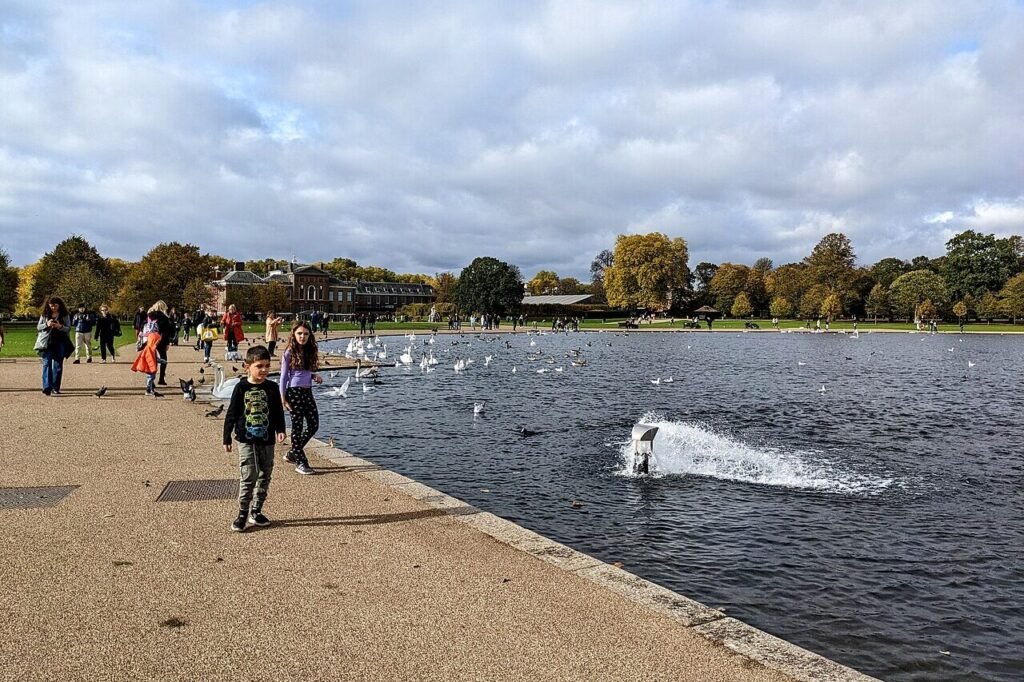
Between the pond and the palace runs the Broad Walk, the great north–south avenue of the park, from Bayswater Road to Kensington Road. Its old elms were felled in the 1950s and replaced with limes and maples. It’s the main route between the Tube stations at Queensway and High Street Kensington, and the palace entrance is just off it.
The Albert Memorial
At the southern edge of the park, opposite the Royal Albert Hall, rises the Albert Memorial, Queen Victoria’s monument to her husband, who died in 1861. Designed by George Gilbert Scott and opened in 1872, it is a soaring Gothic canopy covered in mosaics and statues. The gilded bronze figure of Albert, holding the catalogue of the Great Exhibition he organised, was added in 1876. Look for the marble groups at the corners, representing the four continents, and the frieze of 169 artists, poets, architects and composers around the base.
Diana’s playground and fountain
Near the palace’s northern side is the Diana Memorial Playground, opened in 2000 in memory of Diana, Princess of Wales, who lived at the palace. Inspired by Peter Pan, it has a huge wooden pirate ship, teepees and a sensory trail. Entry is free, but adults must be with a child, so it’s for families only.
The Diana Memorial Fountain, which opened in 2004, is often thought to be in Kensington Gardens, but it’s just over the border in Hyde Park, on the south bank of the Serpentine. It’s an oval ring of Cornish granite, designed by Kathryn Gustafson, with water that tumbles, bubbles and swirls on its way round. From the palace, it’s a 15-minute walk across the Serpentine Bridge. You can also follow the Diana Memorial Walk, a seven-mile trail marked by plaques that passes through Kensington Gardens, Hyde Park, Green Park and St James’s Park. For more, see our page on Diana at Kensington Palace.
More to find
- The Serpentine Galleries. Two free contemporary art galleries, Serpentine South in a 1930s tea pavilion and Serpentine North in a former gunpowder store. Every summer a famous architect designs a temporary pavilion beside Serpentine South.
- The Elfin Oak. An ancient tree stump carved with elves, gnomes and woodland animals by the artist Ivor Innes in 1930, beside the Diana playground.
- Physical Energy. G. F. Watts’s great bronze horse and rider, in the middle of the park.
- The Speke Monument. A granite obelisk to the explorer John Hanning Speke, who searched for the source of the Nile.
- The Flower Walk. A sheltered path of seasonal planting near the Albert Memorial, at its best in late spring and summer.
Planning your visit
Kensington Gardens is free and open every day from 6am. Closing time is at dusk, and changes through the year. The nearest Tube stations are Queensway and Lancaster Gate (Central line) on the north side, and High Street Kensington (Circle and District lines) on the south-west side. For the Albert Memorial, South Kensington and Knightsbridge are both about 15 minutes’ walk. Dogs are welcome, though they must be on a lead in some areas. There are cafés by the Italian Gardens and the Diana playground, and the Orangery and the palace café are open to everyone.
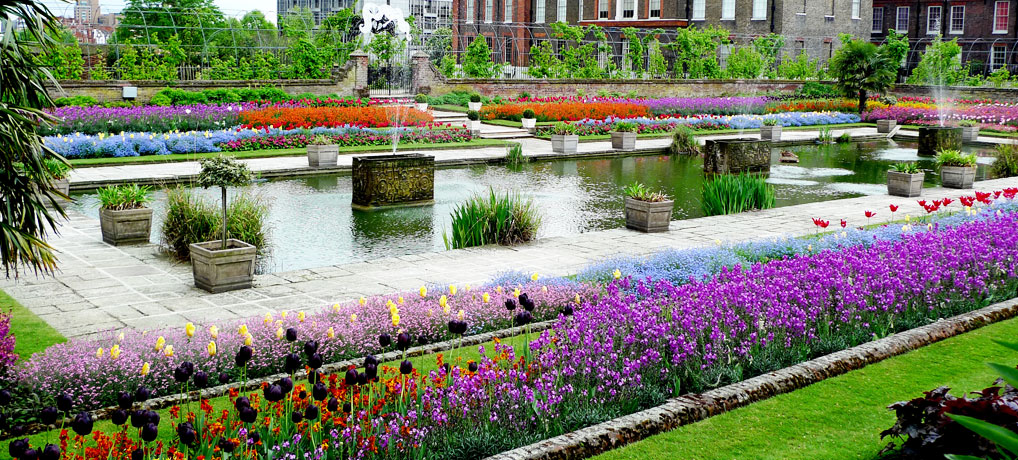
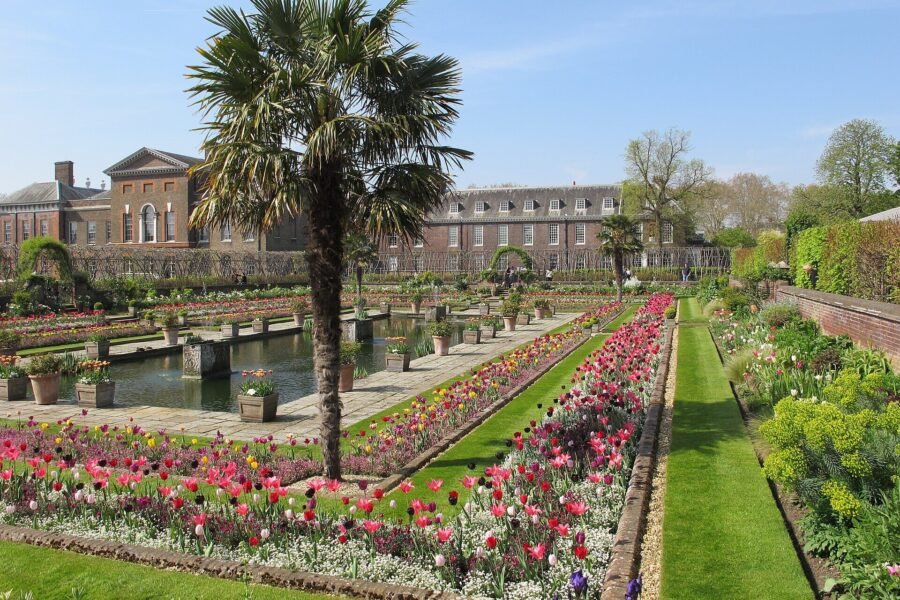
A good loop: start at Queensway, walk down the Broad Walk to the palace and the Sunken Garden, cross to the Round Pond, then head for Peter Pan and the Italian Gardens, finishing at Lancaster Gate. Allow two hours, or a whole afternoon with a palace visit. Combine it with a guided walk and afternoon tea for a full royal day out.
Questions people ask
Is Kensington Gardens free?
Yes. Kensington Gardens is a royal park, free and open to everyone every day from 6am until dusk. You only pay to go inside Kensington Palace.
What is the difference between Kensington Gardens and Hyde Park?
They were once one park. Kensington Gardens is the western part, taken for the palace in the 1690s; Hyde Park is the eastern part. The Serpentine and the Long Water mark the border, and you can walk between them freely.
Where is the Peter Pan statue?
On the west bank of the Long Water, between the Italian Gardens and the Serpentine Bridge. Lancaster Gate is the nearest Tube station.
Is the Diana Memorial Fountain in Kensington Gardens?
No, it’s just inside Hyde Park, on the south side of the Serpentine, about 15 minutes’ walk from Kensington Palace.
Some links on this page earn us a commission at no extra cost to you. How this site makes money